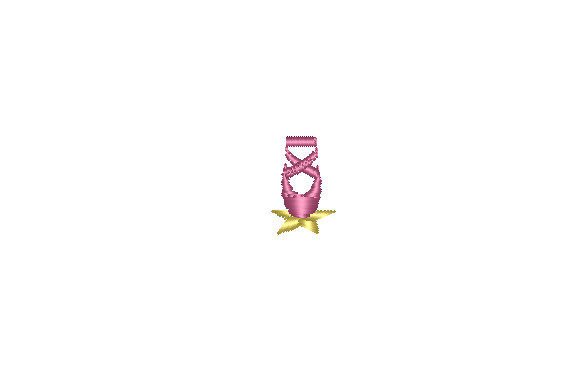
Dance Ballet Slipper and Star
A Playful Yet Polished Touch for Small Business Branding
As an embroidery designer who’s developed hundreds of commercial designs for boutiques, studios, and handmade brands, my first impression of Dance Ballet Slipper and Star is immediate: it’s friendly, elegant, and purpose-built. The pairing of a ballet slipper with a star evokes aspiration, grace, and quiet confidence—not flashy, but memorable. It reads as handmade without sacrificing polish, classic without feeling dated, and dance-themed without alienating non-dancers. That balance is rare—and invaluable when you’re building brand identity across merchandise that must appeal to customers, staff, and partners alike.
Where Dance Ballet Slipper and Star Shines in Real Business Use
This two-color machine embroidery design excels where small-scale impact matters most. For a local florist adding subtle charm to aprons or tote bags, Dance Ballet Slipper and Star offers visual warmth without overwhelming the product. A children’s boutique can stitch it onto pocket flaps of rompers or backpacks—its mini-sized footprint fits naturally on delicate garments. A creative studio or dance school might use it as a chest accent on staff uniforms, reinforcing community and craft in under 15 seconds of visual contact.
It works especially well as an embroidered patch: clean lines hold up at 1.5–2 inches, making it ideal for cap fronts, sleeve details, or bag corner accents. On woven tote bags or linen aprons, the star’s symmetry grounds the slipper’s curve—creating rhythm without clutter. And because it’s designed for the smallest hoops, it scales reliably across production runs, whether you’re embroidering 12 staff caps or 200 limited-edition Etsy bundles.
Smart Placement, Smarter Expectations
Like any strong design asset, Dance Ballet Slipper and Star performs best when matched to the right context. Avoid using it where fine detail gets lost—like curved cap bills with heavy fabric texture or dark denim with low-contrast thread colors. Its two-color simplicity means it thrives on light-to-mid-tone fabrics; on black uniforms or deep navy totes, confirm your thread colors deliver enough contrast before stitching. Also, test it on textured surfaces (terry cloth, bouclé, or quilted canvas)—the minimal stitch density helps, but stabilizer choice becomes critical.
Because it’s optimized for tiny hoops, don’t stretch it beyond ~2.25 inches wide without reviewing spacing and outline integrity. Tiny lettering isn’t part of this design—but if you plan to pair it with custom text (e.g., “Studio Luna” beneath the star), leave generous breathing room. Always mock it up at actual size on your target fabric before approving final artwork for client or production use.
How It Strengthens Your Brand Identity
Dance Ballet Slipper and Star does more than decorate—it signals intention. When stitched onto a bakery’s linen apron or a pet brand’s bandana, it quietly communicates care, attention to detail, and a human-centered aesthetic. Customers recognize consistency: seeing the same refined motif across your tote bag design, staff cap embroidery, and product packaging accents builds trust faster than words alone. For Etsy sellers or craft businesses, it elevates perceived value—transforming a handmade product into a cohesive, professional offering.
Its dance theme adds narrative without limiting audience. Unlike literal slogans or niche icons, it invites interpretation: growth, poise, performance, or personal journey. That openness makes it versatile across industries—from wellness studios to indie bookshops—while still feeling intentional and curated.
Practical Designer Notes Before You Stitch
Before committing Dance Ballet Slipper and Star to your next round of small business merch, run these checks:
- Test in black and white first—verify shape clarity and negative space balance without color distraction.
- Confirm hoop size compatibility—since it’s built for the smallest hoops, ensure your machine and frame support consistent registration at sub-3-inch dimensions.
- Review thread color contrast—especially on dark or busy fabrics. Two colors mean every shade choice affects legibility and tone.
- Inspect spacing and stitch density—look for tight corners or overlapping elements that may pucker or skip on lightweight knits or sheer fabrics.
- Use appropriate stabilizer—lightweight cutaway for stable wovens; tear-away for cotton tees; mesh for caps. Fabric texture changes everything.
- Create a printable mockup for client approval—show scale, placement, and thread options side-by-side with other design assets.
- Compare it beside your full set of design assets—does it align visually with your logo, typography, and color palette? Consistency compounds recognition.
- Confirm commercial licensing before using in client projects, wholesale apparel, or digital embroidery file resale—this is essential for embroidery shops and product designers.
Final Thought: A Thoughtful Asset, Not Just a Design
Dance Ballet Slipper and Star isn’t just another machine embroidery design—it’s a strategic tool for small business owners who understand that every stitch contributes to perception, professionalism, and connection. Whether you’re launching custom apparel for your dance studio, branding reusable totes for your café, or creating embroidered patches for a local maker fair, this design delivers elegance at scale, clarity at size, and charm without cliché. Used intentionally, it becomes part of your brand’s visual language—not decoration, but declaration.