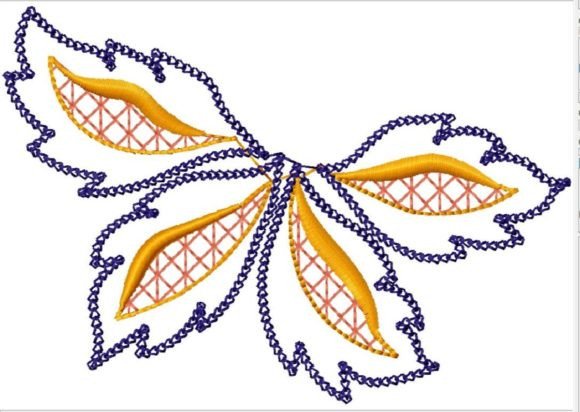
Leaves Hemstitch: A Forest-Inspired Embroidery Design Review
First Impression: Delicate, Timeless, and Quietly Confident
As an embroidery designer who’s prepped over 200 craft fair booths—from Portland bazaars to Nashville maker markets—I opened Leaves Hemstitch expecting something soft and intentional. And I got exactly that. The “white work style” in the description isn’t just marketing fluff—it signals a design built on negative space, fine linearity, and botanical restraint. This isn’t bold foliage or oversized monogramming. It’s whisper-quiet elegance with forest-rooted clarity. Think farmhouse linen napkins, not festival tees. Customers browsing slowly—those who pause at your booth to trace stitching with their fingers—will feel its quiet craftsmanship before they even read the price tag.
Where Leaves Hemstitch Shines on Craft Fair Products
Not every machine embroidery design translates equally across product types. Leaves Hemstitch thrives where subtlety reads as luxury—not noise.
- Tote bags & market bags: Works best centered on natural canvas or unbleached cotton—small-scale (3–4" wide) for a refined accent near the handle seam or lower corner. Avoid full-panel repeats; this design earns attention by contrast, not coverage.
- Aprons & tea towel embroidery: Ideal for upper-left chest placement or folded towel hems. Its linear flow echoes kitchen linens’ functional grace—and customers consistently associate white-on-natural with handmade quality.
- Pillow covers & pouches: At 5–6", it becomes a focal point without overwhelming. Especially effective on oatmeal linen, charcoal chambray, or ivory twill—fabrics where stitch definition stays crisp.
- Embroidered patches: Yes—but only if stitched on stable, midweight twill or denim backing. Avoid lightweight fusible-only methods; the hemstitch lines need clean edge control.
- Caps & curved surfaces: Proceed with caution. The fine line work risks distortion on high-crown caps unless digitized with stretch compensation. Test first on scrap fabric with your exact cap model.
What Makes Leaves Hemstitch a Smart Booth Investment
At a crowded craft fair, visual rhythm matters more than novelty. Leaves Hemstitch delivers consistency: it photographs cleanly for Etsy listings, scales gracefully from 2.5" patches to 8" pillow motifs, and reads instantly as “handmade” — not mass-produced. Unlike dense floral fills or trendy script fonts, this design avoids fatigue. You can display five variations (tea towel, apron, pouch, pillow, patch) and still communicate one cohesive brand story: thoughtful, grounded, quietly forest-inspired.
For Etsy sellers and small shop owners, that cohesion is gold. It strengthens your printable mockup library, streamlines social media visuals, and supports repeat buyers who recognize your aesthetic across categories. As a digital embroidery file, Leaves Hemstitch also pairs well with neutral thread colors—no special metallics or variegated spools required—keeping your production costs lean and predictable.
Production Notes Every Embroidery Business Owner Should Know
This isn’t a “load-and-go” design. Its white work style demands intentionality:
- Stitch density matters: Fine hemstitch lines mean low-to-moderate density—but check for tight corners or overlapping stems. Over-stabilizing can flatten dimension; under-stabilizing causes puckering on textured towels.
- Fabric texture is non-negotiable: Avoid terry cloth, heavy bouclé, or thick quilted cotton. Stick to smooth weaves: linen-cotton blends, medium-weight quilting cotton, or garment-weight rayon blends.
- Dark fabric? Reconsider thread choice: Pure white thread on navy or charcoal may lack contrast. Opt for ecru, oat, or heather gray for warmth—or confirm the embroidery file includes alternate thread color suggestions.
- Hoop size & registration: Since the description mentions “multiple” (likely formats), verify your machine’s native hoop compatibility before batch loading. Misaligned hooping ruins the delicate balance of this design.
Real-World Designer Checklist Before Booth Day
- Test Leaves Hemstitch on scrap fabric matching your final product—same wash, same iron, same stabilizer.
- Compare thread colors across three natural fabrics: unbleached canvas, oat linen, and ivory poplin. Note how light shifts perception.
- Create at least one finished product mockup—not digital, not printed, but stitched, pressed, and displayed as it’ll appear on your table.
- Review spacing between leaf elements: Does it breathe on your chosen product scale? Tight crowding kills white work’s magic.
- Confirm commercial licensing status. If selling finished goods (not just the embroidery file), you need explicit permission—don’t assume “machine embroidery design” implies resale rights.
- Inspect stitch paths for unnecessary jumps or trims—these add time and thread waste during batch runs.
Final Thought: Why Leaves Hemstitch Builds Buyer Trust
In a market flooded with loud, fast, algorithm-chasing designs, Leaves Hemstitch is a slow breath. It tells customers: This was chosen with care. Stitched with precision. Made to last. That message resonates strongest on tactile, functional handmade products—tea towels folded just so, aprons hung with wooden pegs, pouches lined in contrasting cotton. It doesn’t shout “look at me.” It invites: “Look closer.” And in the quiet hum of a craft fair aisle, that invitation converts.
Whether you’re an Etsy seller building a signature line, a boutique maker curating seasonal collections, or a digital embroidery business expanding into Forest-themed design assets—Leaves Hemstitch is more than a machine embroidery design. It’s a versatile, trustworthy, and quietly powerful tool for building handmade value—one precise stitch at a time.